
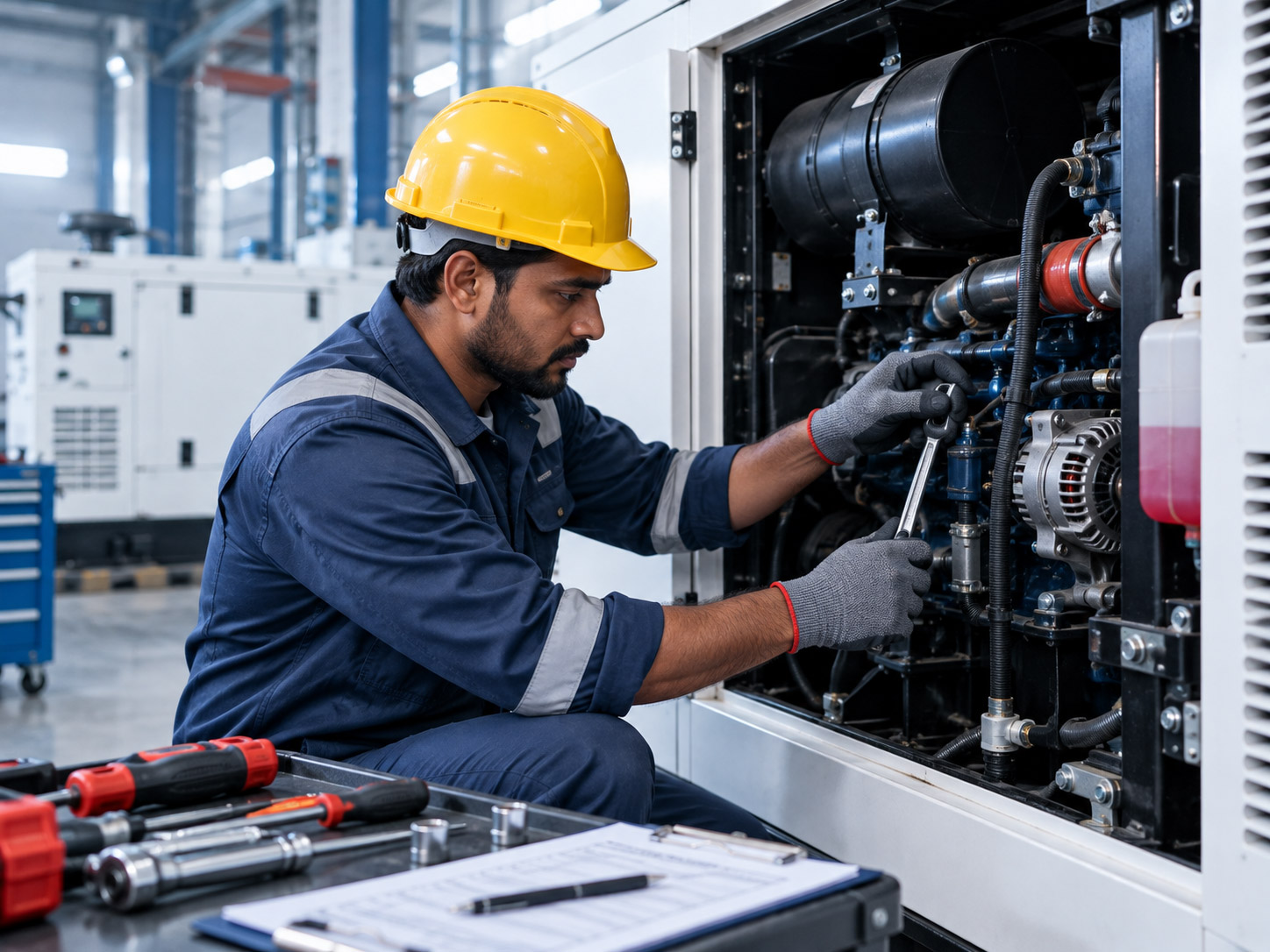
A diesel generator is built to sit idle for long stretches and then start reliably the moment power fails. That kind of readiness does not happen on its own, it comes from a consistent maintenance routine. Skipping servicing rarely causes a problem immediately, but it quietly stacks the odds against you for the one moment you actually need the machine to work.
Here are the maintenance checks every generator owner should have on a regular schedule.
1. Engine Oil and Filter Changes
Oil lubricates and cools the engine's internal components, and it breaks down over time and running hours. Check the oil level before every use, and change the oil and oil filter at the intervals recommended by the manufacturer, or sooner if the generator runs frequently or in dusty conditions. Old, contaminated oil is one of the fastest ways to shorten an engine's life.
2. Cooling System Checks
Overheating is a leading cause of generator breakdowns, especially during long duty cycles. Inspect coolant levels, hoses, and the radiator regularly for leaks, cracks, or blockages, and flush the cooling system at the recommended interval to prevent scale build-up that reduces cooling efficiency.
3. Battery and Starting System
A generator with a dead battery is no better than having no generator at all. Test battery voltage and terminal connections regularly, keep terminals clean and corrosion-free, and replace batteries proactively based on age rather than waiting for a failed start to reveal the problem.
4. Fuel Quality and Tank Care
Diesel that sits unused for months can develop water contamination, algae growth, and sediment, all of which clog fuel filters and injectors. Drain water from fuel-water separators regularly, replace fuel filters on schedule, and consider a fuel stabiliser or fuel polishing service for generators that see infrequent use.
Maintenance Checklist at a Glance
- Check oil level and condition before every run; change oil and filter on schedule
- Inspect coolant level, hoses, and radiator for leaks or blockages
- Test battery voltage and clean terminal connections
- Drain water from fuel separators and replace fuel filters regularly
- Inspect the exhaust system and silencer for corrosion or leaks
- Run the generator under load periodically, not just on no-load idle
- Test the Automatic Transfer Switch (ATS) and control panel function
5. Load Testing, Not Just Idle Running
Starting a generator and letting it idle for a few minutes tells you very little about how it will perform under real load. Periodic load bank testing or running the generator under its actual connected load reveals issues, such as a failing alternator or fuel delivery problem, long before a real outage does.
Why an AMC Makes This Easier
Keeping up with all of this in-house is possible, but most businesses find it far more reliable to have a structured Annual Maintenance Contract in place. A good AMC covers scheduled servicing, genuine spare parts, and priority breakdown support, so maintenance happens on a fixed calendar rather than being pushed down the priority list until something fails.